

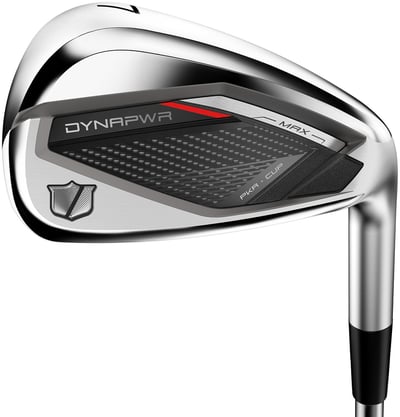


Wilson DYNAPWR Max Irons (Right-Handed, 5-PW + GW, REC DRT HDC 70R) – Product Review
Introduction
The Wilson DYNAPWR Max Irons are a game-improvement iron set from Wilson,
a long-standing manufacturer in the golf equipment space. This set—configured for right-handed players
and covering 5-iron through pitching wedge (PW) plus a gap wedge (GW)—is built for golfers who want
easy launch, forgiveness on mishits, and consistent distance. At a listed price of
$999.99, it sits in the premium segment for modern, performance-focused iron packages.
Appearance, Materials & Design
The DYNAPWR Max branding suggests a focus on maximum help: a confidence-inspiring look at address and a design that
favors stability and launch. The overall aesthetic is modern and “tech-forward,” with a clean, performance-oriented finish
that should appeal to players who prioritize results over a traditional blade-like profile.
While detailed construction specs aren’t provided here (such as specific steel type, face construction, or finish process),
the “Max” designation typically indicates:
- A larger clubhead footprint for confidence at address
- Perimeter weighting tendencies for added stability
- Design emphasis on higher launch and help on off-center strikes
The included gap wedge is a noteworthy design choice in the set makeup—helping to smooth distance gaps
between your pitching wedge and sand wedge, which is an area many golfers struggle with when using traditional iron sets.
Key Features & Specifications
- Model: Wilson DYNAPWR Max Irons
- Hand: Right-handed
- Set Composition: 5, 6, 7, 8, 9, PW, GW
- Shaft: REC DRT HDC 70R
- Flex: R (Regular)
- Category/Intent: Game-improvement / maximum forgiveness irons
- Price: $999.99
Performance & On-Course Experience
1) Forgiveness on Mishits
The standout reason to consider a “Max” iron is forgiveness. In practical terms, this type of iron is designed to keep
the ball speed and launch more stable when contact drifts away from the center of the face. For mid- to higher-handicap
golfers (or anyone returning to the game), that typically translates into:
- Less severe distance loss on thin or heel/toe strikes
- More playable results when swing consistency varies
- Improved confidence to swing without “steering” the club
2) Launch and Carry Distance
The combination of a game-improvement head design and a 70-gram Regular flex shaft often suits players with
moderate swing speeds who want help getting the ball airborne. In typical real-world scenarios—approach shots into greens,
par-3 tee shots, and second shots on par-5s—you can expect a profile that leans toward:
- Higher launch compared with players’ irons
- Easier carry distance for holding greens
- More consistency when you don’t catch it perfectly
If you are a high-speed player who already generates plenty of height and spin, you may find “Max” irons launch a bit too high
or fly with a more draw-biased tendency (depending on your swing and the set’s inherent weighting). That’s not a flaw—just a fit
consideration.
3) Feel and Feedback
Most maximum-forgiveness irons trade a bit of crisp, precise feedback for stability and speed retention.
In practice, you may notice:
- A more muted or “dampened” feel compared with forged players’ irons
- Less detailed strike feedback (good for comfort, less ideal for shotmakers)
- A generally solid sensation on center hits, with adequate feedback to know when you missed it
4) Playability in Common Situations
-
Approaches from the fairway: The set is geared toward producing repeatable carry and a high-enough launch to
stop the ball on greens more reliably. -
Light rough: A forgiving head shape typically helps maintain stability when the clubface is slightly disrupted,
though heavy rough will still reduce spin and control (as it does for any iron). -
Long iron replacements: Since the set starts at a 5-iron, many golfers may pair it with hybrids or high-lofted
fairway woods above it. If you struggle with long irons, this set composition makes sense as a “core scoring set.” -
Wedge gapping: Including the GW is practical for dialing in full-swing distances inside 120–90 yards
(exact yardages vary by golfer). It helps reduce the “in-between” shots that often cost strokes.
Pros & Cons
Pros
- Forgiving design suited to golfers who want more consistent results on mishits
- Confidence-inspiring look typical of maximum game-improvement irons
- High-launch friendly setup that can help players who struggle to get irons airborne
- Includes a gap wedge (GW) for better set gapping and more scoring-shot options
- Regular flex, 70g shaft option that often fits a broad range of moderate swing speeds
Cons
-
Not ideal for shot-shaping purists: Players seeking maximum workability and precise feedback may prefer a players’
cavity or forged iron. -
Potential for “too much help” for some swings: Golfers who naturally hit it high or fight a left miss may need careful
fitting to confirm launch, lie angle, and shaft pairing. -
Premium price point ($999.99): Competitive with other major-brand iron sets, but still a significant investment—especially
if you also need wedges or hybrids to complete the bag. -
Limited data provided here: Without detailed specs (lofts, lie angles, head construction), buyers should confirm
the exact build and gapping before purchase.
Conclusion
The Wilson DYNAPWR Max Irons (5-PW, GW) are positioned as a strong option for golfers who want
forgiveness, easier launch, and dependable performance throughout the most commonly used scoring clubs.
The inclusion of the gap wedge is a practical bonus that can immediately improve distance coverage and confidence on
approach shots.
At $999.99, these irons make the most sense for buyers who plan to keep them for multiple seasons and who value a
modern, game-improvement build. For the best results, consider a quick fitting (even a basic one) to validate that the
REC DRT HDC 70R shaft and overall setup match your swing speed, launch needs, and typical miss pattern.




Reviews
There are no reviews yet.