

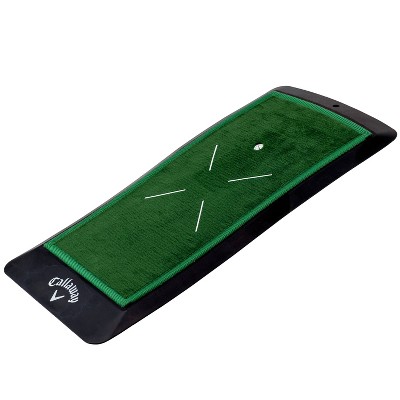

Callaway Strike Zone Hitting Mat Golf Tool: Practice & Training Accessory — Product Review
Introduction
The Callaway Strike Zone Hitting Mat is a golf practice and training accessory
from Callaway, a well-known manufacturer in the golf equipment space. Priced at
$31.49, it’s designed to help golfers practice cleaner contact and more consistent ball striking
at home, in the garage, or at the range. The core idea is simple: provide a dedicated “strike zone” target area
that encourages proper setup and helps identify where your club is bottoming out.
Appearance, Materials & Design
Aesthetically, this is a purpose-built training mat rather than a full-size range mat. It typically presents a
compact footprint that’s easy to roll, store, or toss in a golf bag. The visual design centers on a clearly marked
strike zone, using contrasting colors and/or alignment markings to guide ball position and
club-path practice.
While exact material details aren’t provided in the product data here, hitting mats in this category commonly use
a durable synthetic turf top layer and a grippy backing intended to reduce sliding. The “training tool” nature of
the mat is evident in the emphasis on high-visibility markings, which is one of its distinguishing design elements
versus plain turf mats.
Key Features & Specifications
- Brand/Manufacturer: Callaway
- Category: Golf practice & training accessory (hitting/training mat)
- Intended use: Improve strike consistency, ball-first contact, and setup/alignment habits
- Training markings: A defined “strike zone” target area to encourage consistent impact location
- Compact form factor: Easier storage and portability than full-size hitting mats
- Price: $31.49
Using the Mat: Real-World Experience
1) Indoor Practice (Garage/Basement)
In a confined practice area, the Strike Zone concept is most useful for structured repetition. The visual target
encourages you to place the ball consistently and focus on returning the club to the same bottom-of-arc point.
For golfers working on crisp iron contact, this kind of cueing can be helpful—especially when paired with a net and
some basic feedback (even just listening/feeling for clean contact).
One practical consideration indoors is stability. Compact mats can shift on smooth floors.
If you’re practicing on concrete, tile, or slick epoxy garage floors, you may need an additional underlayer
(e.g., thin non-slip rug pad) to prevent movement.
2) Backyard Sessions
Outdoors, the mat serves as a consistent hitting surface when grass conditions vary. This is useful for quick
sessions where you want repeatability without tearing up turf. The alignment/strike markings make it easier to
keep each “rep” comparable, which can improve practice quality compared to casually hitting off uneven ground.
Wind, moisture, and dirt can affect any turf-style training aid. If used on damp ground, expect more cleanup and
consider drying it before storage to prolong its life.
3) Range Warm-Ups and Drill Work
If you take it to the range, the mat functions more as a training overlay than a replacement for
range turf. The major benefit here is the clearly defined strike area that makes it easier to commit to a specific
ball position and swing intention during warm-ups. It’s also handy for structured drills (e.g., emphasizing a
forward low point for irons).
The trade-off is that a smaller mat provides less “standing room” compared with full-range stations, so you may
need to position it carefully to maintain a natural stance.
4) Feedback and Skill Development
The Strike Zone approach is best for golfers who respond well to visual constraints. Repeating
swings while keeping the ball and intended impact area consistent can help you notice pattern issues (such as
hitting behind the ball or struggling to return the clubface square). However, it’s not a magic fix on its own:
without a way to measure actual club-path/face angle (launch monitor) or at least record swings on video, the mat
primarily reinforces setup discipline and contact intent rather than providing detailed diagnostics.
Pros & Cons
Pros
- Clear training purpose: The defined strike zone encourages consistent setup and contact practice.
- Compact and portable: Easier to store and transport than a full-size hitting mat.
- Good value point: At $31.49, it’s a relatively accessible training aid from a major golf brand.
- Versatile use cases: Works for home practice, backyard sessions, and range warm-ups.
Cons
- Limited surface area: Smaller mats can feel restrictive for stance/foot placement compared to full-size mats.
- Potential for sliding: On smooth indoor floors, you may need extra grip or an underlayer.
- Not a full diagnostic tool: Helpful for structure and repetition, but it won’t replace video analysis or launch data.
- Material details not explicit: Without clear specs on thickness/density, long-term durability and joint comfort may vary by user expectations.
Conclusion
The Callaway Strike Zone Hitting Mat is a practical, budget-friendly training accessory aimed at
golfers who want more structured practice and better consistency in their setup and strike location. Its biggest
strength is the simple, focused design—visual guidance that nudges you toward repeatable ball position and a more
intentional impact point. The main limitations are common to compact training mats: less room for stance, potential
sliding on slick surfaces, and limited feedback beyond what you can feel or observe.
For golfers seeking an affordable way to make home or range practice more deliberate—without committing to a large,
expensive hitting platform—this mat is a sensible addition to a practice kit, especially when paired with a net and
occasional video feedback.



Reviews
There are no reviews yet.