

Dreaming of a sleek home golf escape? This Modern Golf Room with Putting Green + Simulator rounds up smart golf room ideas for any home, from small space golf upgrades to full man cave golf vibes. Learn how to plan an indoor putting green, dial in a pro-level golf simulator setup, and choose the right golf simulator projector, hitting mat, and golf net. We’ll also cover lighting, sound, and a tidy club storage rack so your space looks sharp and plays even better.
Small Space Golf Planning: Measure, Map, and Maximize
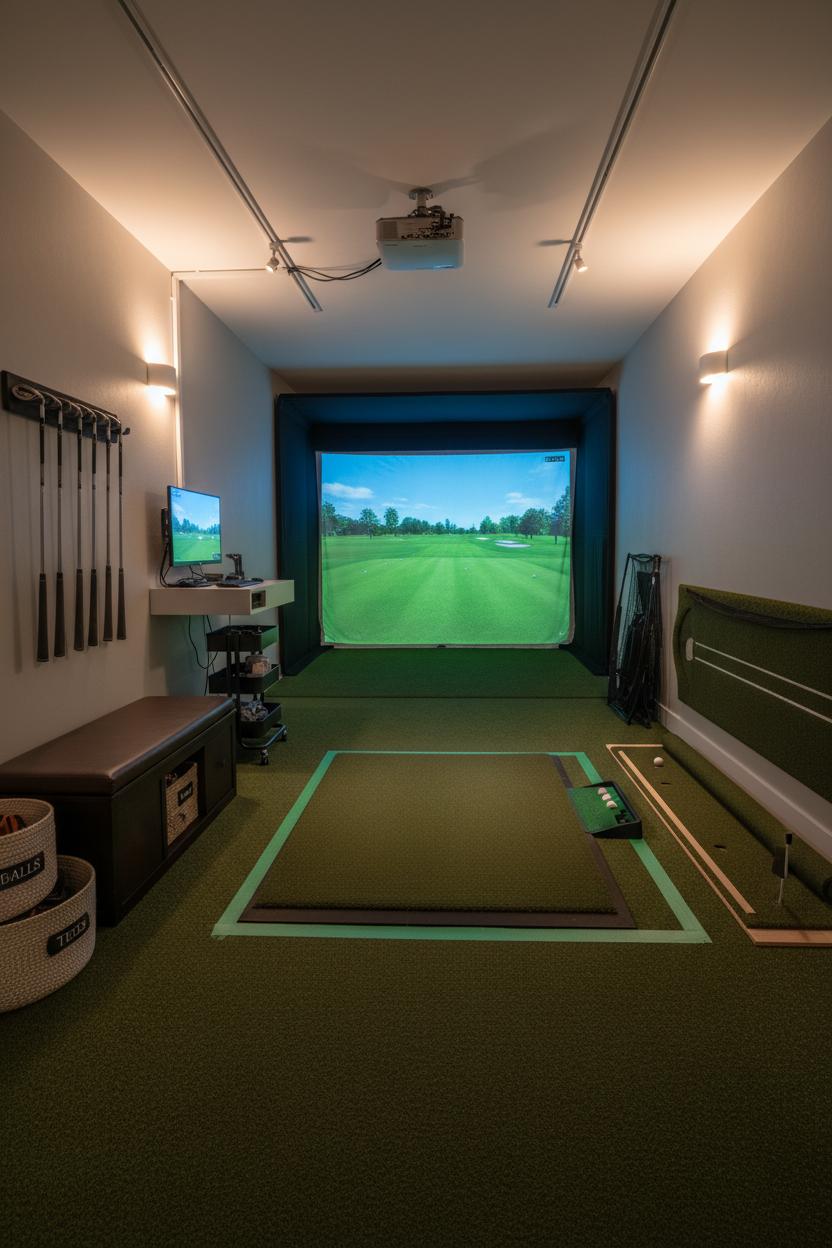
Before you buy a single roll of turf or hang a framed scorecard, grab a tape measure and get cozy with your dimensions. In small space golf planning, inches matter. Start with ceiling height: for a comfortable swing arc (especially with a driver), aim for around 9 feet if you can; 8 feet can work for irons and a compact swing. Map the width for your stance plus follow-through, then note door swings, windows, and outlets that could influence layout. Use painter’s tape to sketch your hitting mat, the footprint of an indoor putting green, and the screen or golf net if a full simulator screen won’t fit. Mark a safety buffer behind you and on both sides. This quick taping session will instantly reveal smart golf room ideas—like rotating a layout on the diagonal to gain a few crucial inches or choosing a runner-style green that hugs a wall. If you’re chasing that man cave golf vibe, consider how seating, snacks, and storage share the room without crowding your swing.
Next, map the tech. A dialed golf simulator setup starts with the throw distance of your golf simulator projector—short-throw models are heroes in tight rooms and help prevent shadows. Mark the projector’s mount point on the ceiling, run a path for power and HDMI, and note where your laptop or gaming PC will live with solid ventilation. Align the hitting mat to the screen’s centerline, and plan camera or sensor placement so nothing blocks the ball flight. Layer in lighting you can dim: soft sconces or a track along the perimeter keep glare off the screen and turf while giving that warm, clubhouse-after-hours glow.
Finally, maximize every nook with storage and flexible pieces. A wall-mounted club storage rack clears floor space and turns your favorite sticks into decor. Stash balls, tees, and alignment sticks in labeled baskets; tuck a rolling cart under a console for tech and training aids. Choose a roll-up indoor putting green you can contour with thin foam shims for break practice, then store it vertically when company comes over. A foldable golf net and a portable hitting mat keep the room multifunctional, while a bench with hidden storage corrals shoes and accessories. With smart measuring, thoughtful mapping, and space-savvy swaps, small space golf becomes not just possible—but irresistibly polished.
Indoor Putting Green Design: Turf, Contours, and Cup Placement
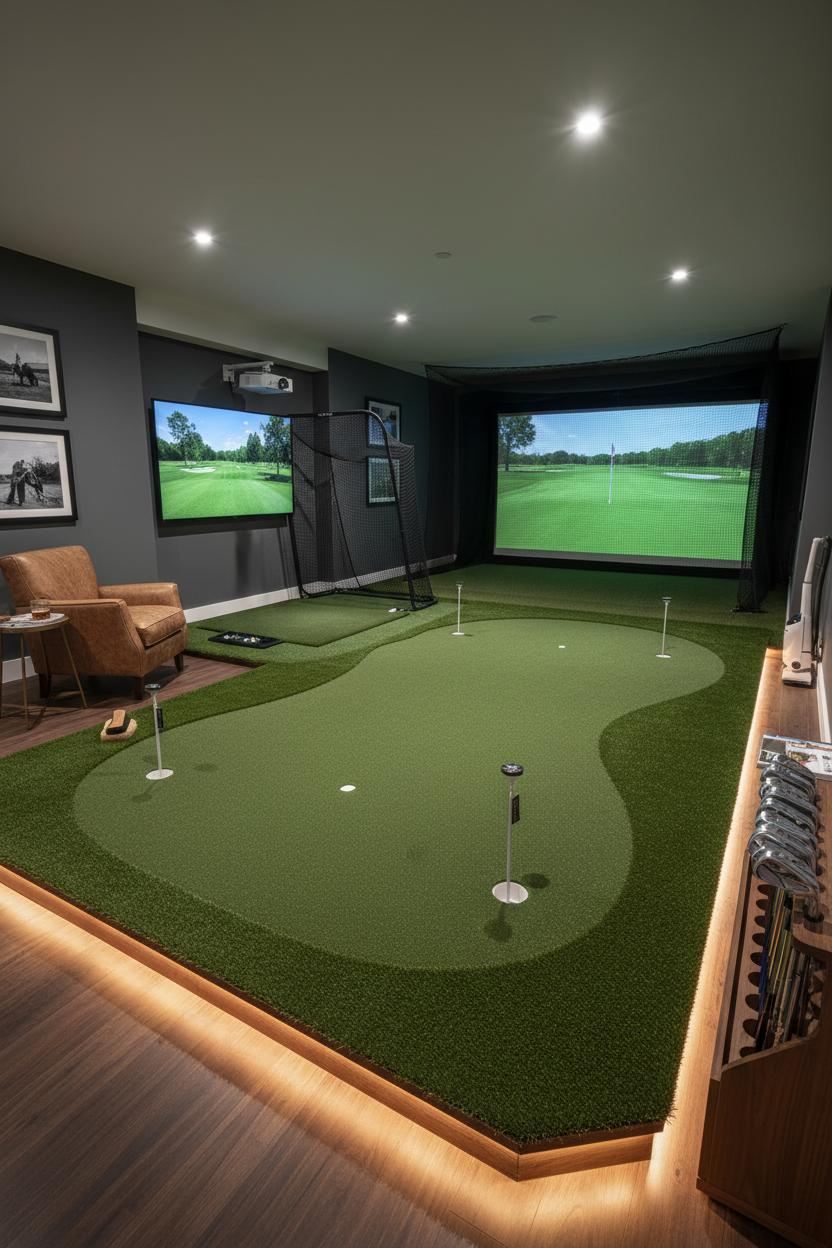
When you’re dreaming up golf room ideas, start with the feel underfoot. The magic of an indoor putting green begins with turf selection: a short, tightly woven pile mimics quick, tour-style speeds, while a slightly taller, plusher option is more forgiving and quiet under step—great if your golf simulator setup lives in a shared space. Look for turf you can brush to maintain roll direction, and pair it with a stable base—think rigid foam or modular panels—to keep the surface true over time. From there, introduce gentle contours that encourage real reads without turning every putt into a circus; a subtle ridge across the midline or a soft fall-off to one side adds variety without frustration. If you’re in small space golf mode, channel breaks toward target cups so you get challenge and makeable finishes. Keep lighting even to prevent shadow “breaks,” and orient your longest putts away from doorways or windows so you can settle in and practice without distraction.
Cup placement is where strategy meets style. Stagger three to five holes at varied distances, mixing a confident straight-in line with one or two that demand pace control on a side slope. Place at least one cup near an edge for playful lag drills and another near center for repeatable benchmarks; leave clear runways of six to eight feet so you aren’t putting straight into a wall. If your green sits beside a hitting mat and golf net, align an approach lane so you can transition from chips to putts seamlessly, and double-check projector sightlines so the golf simulator projector doesn’t cast glare across the surface. For man cave golf vibes, wrap the platform with LED toe-kick lighting and tuck a club storage rack into the base for sleek organization. In tighter rooms, a roll-up indoor putting green or modular tiles let you reconfigure breaks, and slim cup inserts keep the profile low. Finish with a soft brush and occasional vacuum to refresh the nap, and you’ll have a green that rolls true, looks design-forward, and ties the whole space together—practice station, hangout zone, and performance lab all in one.
Golf Simulator Setup Basics: Screen, Sensors, and Golf Simulator Projector
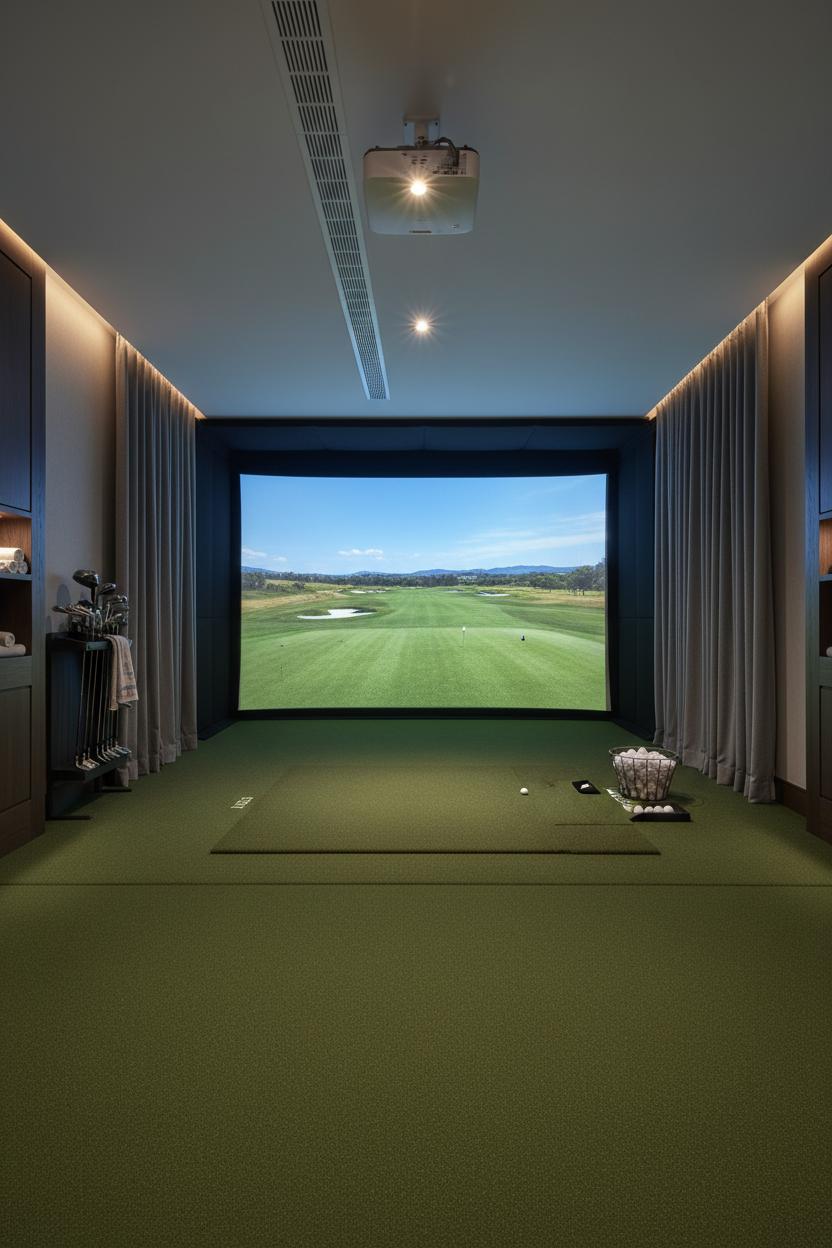
When you’re dreaming up golf room ideas that feel polished and welcoming, start with the screen. Think of it as your room’s statement wall: a crisp, quiet canvas that swallows the ball and throws back a lifelike course view. For most homes, an impact screen about 8–10 feet wide with side curtains or an enclosure keeps everything neat and safe; aim for 9–10 feet of ceiling height if you can, and leave about 10–12 feet from tee to screen for a comfortable swing arc. If you’re doing small space golf, a high-quality golf net paired with a wall‑mounted TV can still deliver a fun vibe, but the immersive feel of a full screen is hard to beat. Add a sturdy hitting mat that’s gentle on your joints and lines up flush with the floor so it transitions seamlessly into your indoor putting green for that clean, custom look.
Next up in your golf simulator setup: sensors. Camera‑based systems love consistent lighting and a matte, non‑glare screen; radar units appreciate a bit more depth behind you. Infrared and photometric options sit close to the ball and read clubface and spin beautifully when your hitting mat is level and marked for tee position. Keep reflective surfaces behind the tee to a minimum, and dim any hot spot lights that could confuse cameras. A measured tee‑to‑screen distance (often 8–10 feet) and a centered ball position relative to the screen are small details that elevate accuracy and keep the experience smooth. If this is a man cave golf sanctuary, consider discreet floor markings for lefty/righty play and stash a soft basket of balls nearby so resets feel effortless.
Finally, your golf simulator projector is the mood‑maker. Choose a bright short‑throw model (3,000+ lumens is a solid target) to fill the screen from a close mount, reduce shadows, and preserve that cozy, cinema‑meets‑fairway glow. Ceiling mounting keeps sightlines clean; run cabling through a raceway and anchor the projector square to the screen to avoid warp. Match your aspect ratio (16:9 or 16:10) to the screen size for crisp edges. Finish with the little luxuries: a slim club storage rack to corral wedges and woods, hidden shelves for tees and towels, and a roll‑out indoor putting green that doubles as décor when the sim powers down. It’s a setup that performs on Sunday morning and looks beautiful by Friday night.
Build the Hitting Zone: Hitting Mat, Golf Net, and Impact Safety
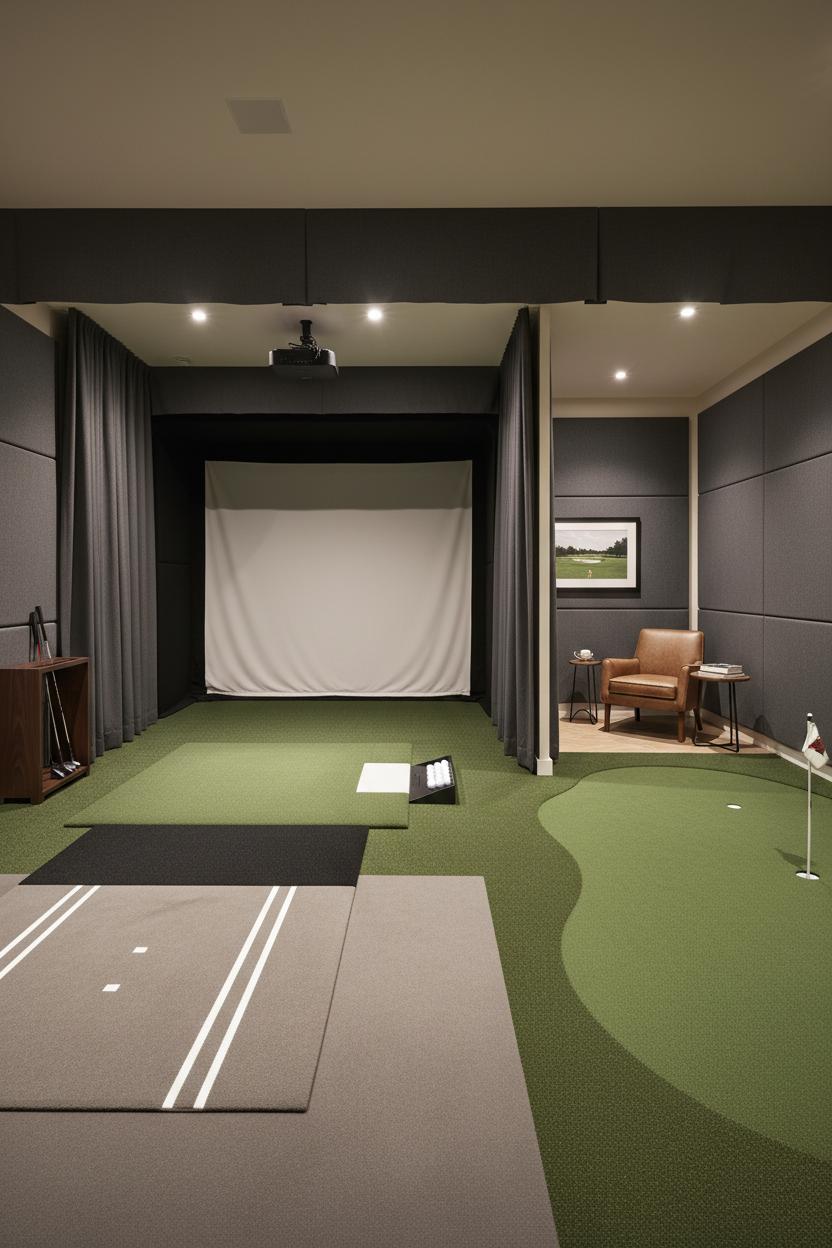
Start by carving out a clear, confidence-boosting “launch pad” for your swing. The hitting zone is the heart of your simulator and the perfect counterpoint to your indoor putting green, so think durable, quiet, and safe. A premium hitting mat is non-negotiable—look for a forgiving hitting mat with replaceable strike inserts to save your joints and keep divots realistic. Layer a dense rug pad or foam underlayment to soften impact and hush the thud of shots. If you have room, add a stance mat wide enough for alignment sticks and a comfortable base for your feet. Place a low-profile ball tray to the side and a slim club storage rack within arm’s reach so the flow feels natural and tidy.
For containment, choose a golf net or an impact screen with some “give.” A golf net is a great budget and small space golf win; an impact screen is ideal if you’re heading toward a full golf simulator setup. Either way, add side curtains or netting, plus a few inches of space behind the screen to absorb energy and reduce bounce-back. Soft wall panels or moving blankets behind and to the sides are the unsung heroes—bonus points for noise control and a cozy, studio vibe. Mind your ceiling too: protect it with netting or a fabric valance where the arc of your driver might wander. If you’re using a golf simulator projector, mount it safely out of the swing path and run cables cleanly along the ceiling so nothing distracts you mid-backswing.
Dial in the details to match your style—cohesive textures, a muted color palette, and warm lighting turn the space from utility to retreat-worthy man cave golf. For renters or tight footprints, offset the hitting position slightly and use a retractable golf net to keep the room flexible; it’s one of those clever golf room ideas that makes everyday living easier. Keep the indoor putting green close so practice flows naturally from chips to rolls, and let your tech and turf live harmoniously. Whether you’re aiming for a full simulator or a starter bay, a safe, cushioned hitting zone with a quality mat, protective netting, and thoughtful storage sets the tone for practice you’ll actually look forward to—no matter the weather.
Storage Solutions: Club Storage Rack, Balls, Tees, and Accessories
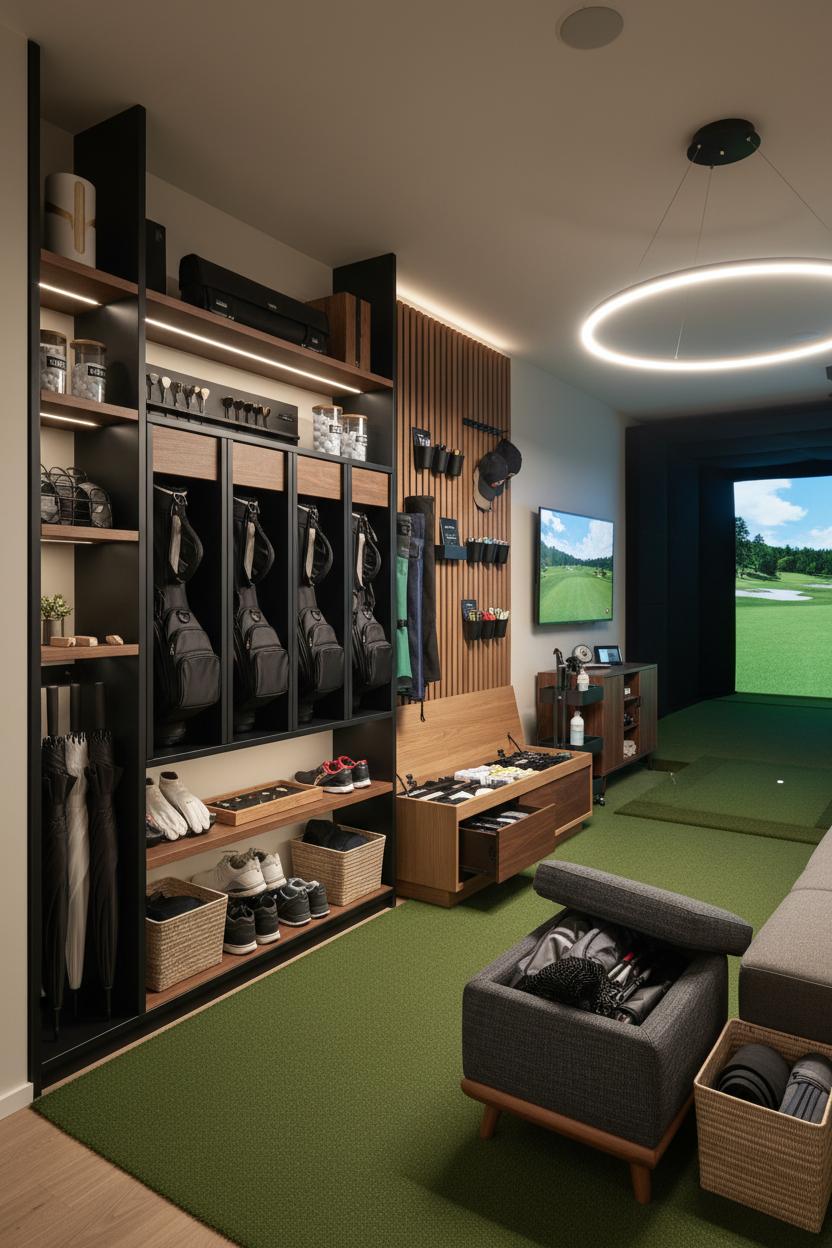
Storage is the quiet hero of a modern golf room, and a thoughtful plan keeps the space feeling calm, curated, and always ready for play. Start with a sturdy club storage rack that doubles as decor—think matte black metal or warm wood that echoes your flooring—and let it anchor the room like a mini locker wall. Give each bag a dedicated bay, then layer in low baskets for gloves and towels, a narrow tray for shoes, and a slim umbrella slot to keep drips off your turf. Clear canisters or labeled drawers make balls and tees feel boutique instead of bulk, and a small magnetic strip for ball markers and divot tools is a surprisingly chic touch. Whether your vibe leans man cave golf or more elevated lounge, this is where function meets those dreamy golf room ideas you’ve been saving.
For gear that comes and goes with your routine, think in zones. Near the indoor putting green, a shallow bench with lift-up storage tucks away alignment sticks, foam practice balls, and putting aids when guests drop by. Beside your golf simulator setup, a compact media cabinet corrals the tech: keep the launch monitor, spare cables, and the golf simulator projector remote in a single drawer, then route cords through a cable grommet so everything looks wireless and worry-free. Pegboard or slatted wall panels are great for vertical organization in small space golf rooms—clip on cups for tees, hooks for hats, and a shelf for towels and scorecards, all within arm’s reach but off the floor.
Bulky items deserve clever hideaways. Slide the hitting mat behind the club storage rack or into a slim closet sleeve; fold a collapsible golf net into an ottoman that doubles as seating; and park a rolling cart for quick-access essentials—cleaning spray, extra grips, rangefinder, and a spare HDMI for the projector. If your indoor putting green isn’t permanent, a roll-up version stows neatly under a sofa, while soft bins hold winter layers or spare shoes without crowding your look. Finish with cedar blocks to keep things fresh, woven textures for warmth, and a tight color palette so every piece feels intentional. When everything has a home, your space flips from practice session to laid-back lounge in minutes—a polished, practical answer to small space golf that still feels like a treat.
Man Cave Golf Aesthetics: Lighting, Seating, and Display
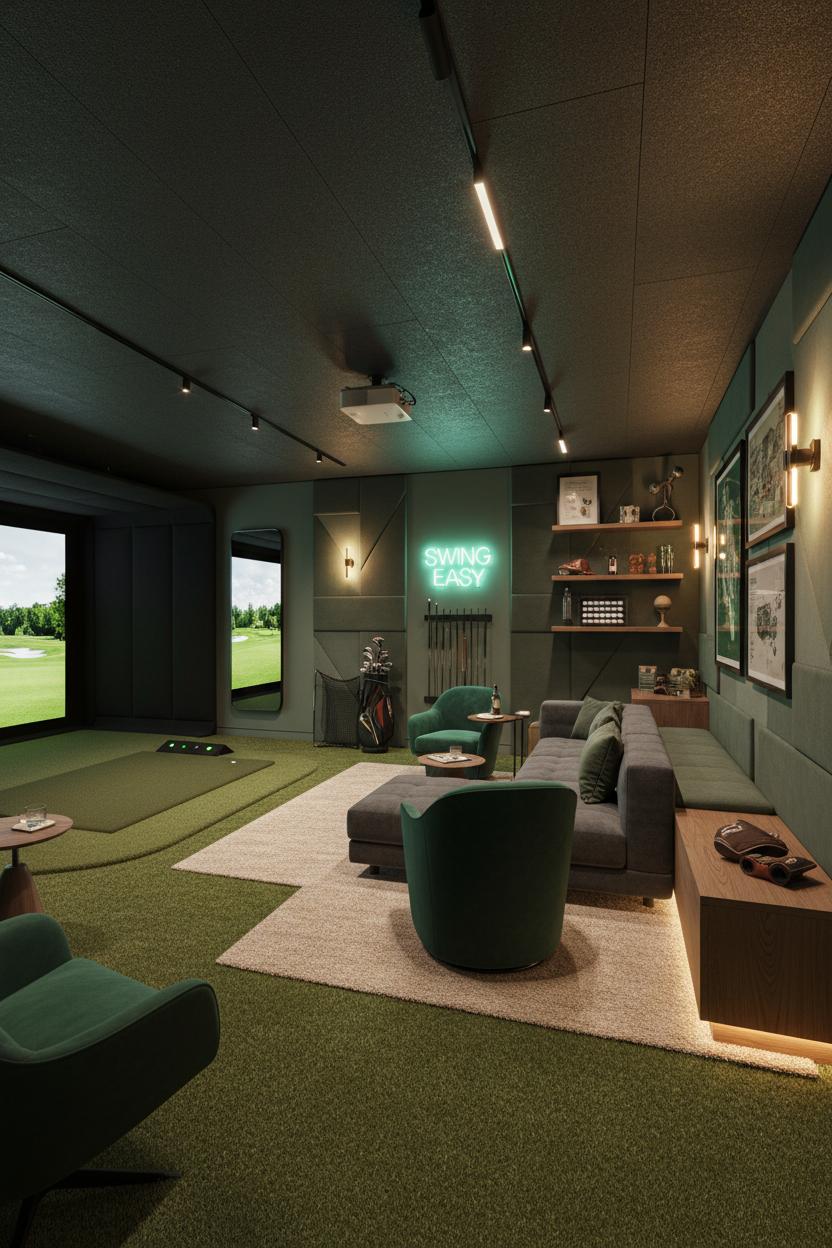
Lighting sets the entire vibe of a man cave golf space, so start with layers. Think warm, dimmable recessed lights for ambient glow, then add task lighting where you need precision—track heads or slim spots aimed at your hitting mat and along the line of your indoor putting green. Save a soft accent for the showstopper moments: LED strips tucked under shelves or along the simulator enclosure, and a few sculptural sconces for mood. If your golf simulator setup includes a golf simulator projector, keep wall paint matte and choose bulbs around 3000–3500K to reduce glare and hotspotting on the screen. Blackout shades help with image quality, and a dark ceiling or acoustic panels make the room feel luxe while taming sound. In small space golf rooms, try toe-kick lights and low-profile fixtures to keep sightlines clean without sacrificing drama.
For seating, choose pieces that feel loungey but don’t steal swing clearance. Low-profile sectionals in performance fabric, a pair of swivel club chairs, or a built-in banquette with hidden storage keep things cozy and practical. Add a slim bar ledge behind the simulator seats for viewing parties, with pedestal side tables for that post-putt drink. Ottomans that roll out of the way are clutch when you open up the hitting bay. If you love that Pinterest-ready layered look, float a nubby rug over the turf to define the lounge zone, and use upholstered wall panels that double as art and acoustic treatment. Keep everything on casters or light enough to move when it’s practice time—comfort should never compete with your swing path.
Display is where personality shines. Style a tidy club storage rack as your focal wall and flank it with floating shelves for balls, tees, and meaningful mementos—scorecards, vintage covers, even a favorite glove in a shadow box. A slim mirror near the bay is perfect for quick swing checks, while a collapsible golf net can tuck into a cabinet when guests arrive. Hide cables from the projector and sensors for that clean, curated finish. If you’re collecting golf room ideas, weave in a muted green-and-charcoal palette, a neon sign, and a few framed course maps. The result is a modern, man cave golf retreat where tech, texture, and taste play together—equally ready for practice reps or movie night.
Budget to Premium: Golf Room Ideas for Every Price Point
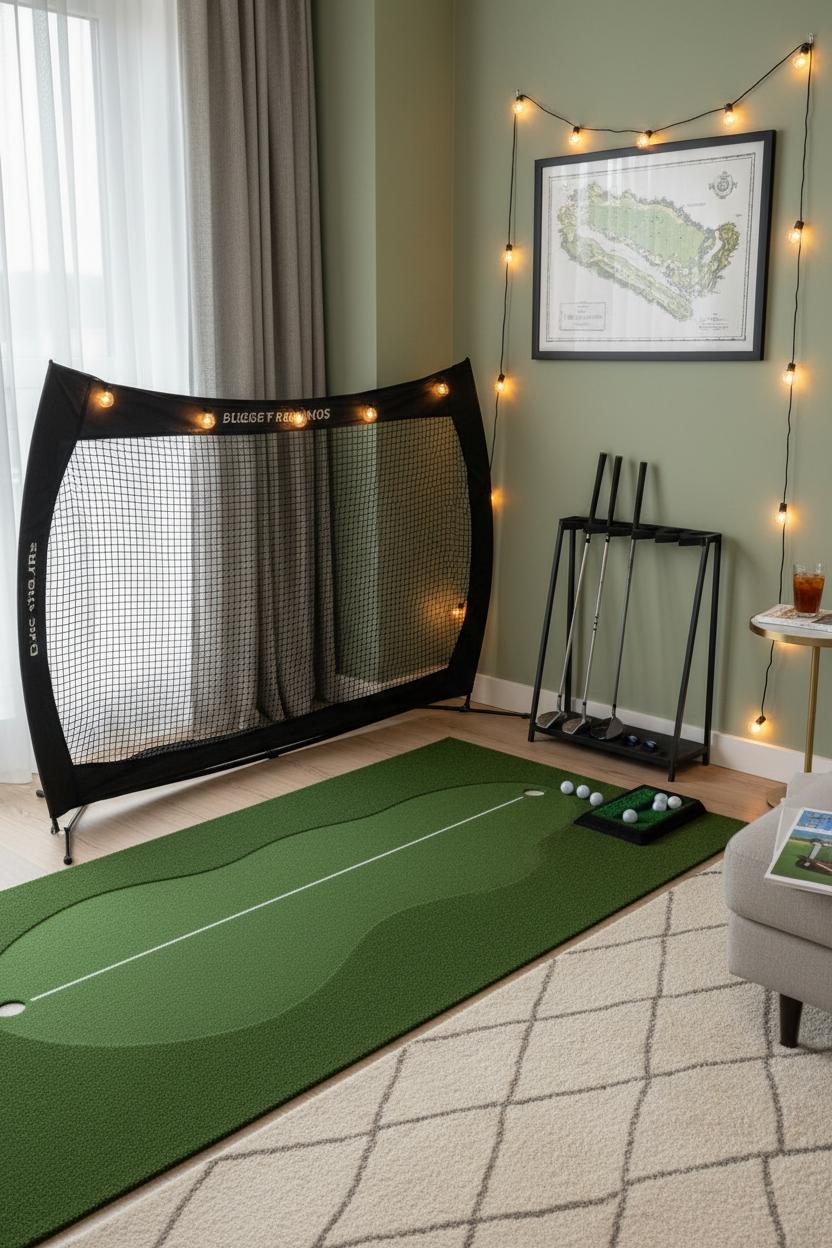
Ready to build your dream corner? Start small and smart. These golf room ideas shine in apartments and spare nooks, proving that small space golf can still feel luxe. Roll out an indoor putting green to set the mood, then layer in a budget hitting mat and a foldable golf net so you can chip and roll without fear. A slim club storage rack keeps wedges and putters tidy (and doubles as décor when you lean a favorite driver just so). Add a soft rug, a framed vintage course map, and warm string lights, and you’ve got an instant man cave golf vibe without the renovation bill.
When you’re ready to level up, a mid-range golf simulator setup is the sweet spot. Pair an entry-level launch monitor with an impact screen and a compact golf simulator projector for crisp visuals in tight rooms. Upgrade to a thicker hitting mat to protect your joints and dial in realism, and swap that roll-up green for a truer putting surface to practice five-foot pressure putts. Blackout curtains and a handful of acoustic panels help with immersion and echo, while a low media console hides tech and keeps cables from stealing the spotlight. Keep rotation-ready wedges on a wall-mounted club storage rack, stash balls in baskets, and use a slim bench for shoe changes so the space feels polished, purposeful, and always ready for a quick nine after dinner.
Going premium? Think custom-built sanctuary. Elevate the floor with a platform for stance and turf transitions, then frame a widescreen enclosure with a high-lumen golf simulator projector and dual cameras for buttery ball tracking. Choose a multi-layer hitting mat with a replaceable insert, run concealed power behind the screen, and add dimmable sconces and LED cove lighting to set the scene. Wrap three walls in turf or acoustic fabric, slip in plush theater seating and a bar cart, and finish with cabinetry that hides a ball dispenser, speaker system, and a handsome club storage rack for the full pro-studio effect. Whether you’re on a shoestring or going all out, curate textures, keep it tidy, and let your favorite courses inspire the palette—your modern golf room with putting green + simulator will feel like a retreat at any budget.
Maintenance and Calibration: Keep Your Golf Simulator Setup Dialed
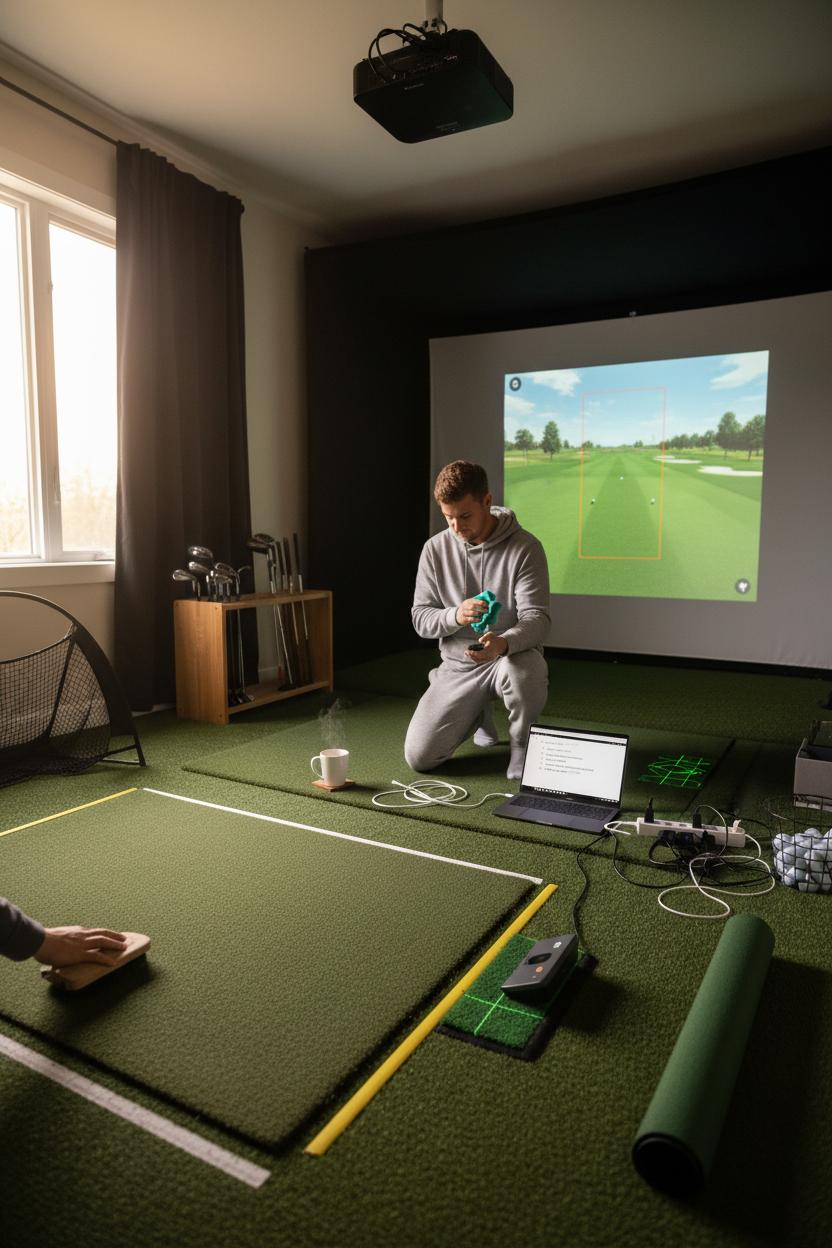
Think of maintenance and calibration as the cozy Sunday reset for your golf simulator setup—coffee in hand, playlist on, a few intentional tweaks that keep everything crisp. Start with the golf simulator projector: dust the lens with a microfiber cloth, check focus and keystone, and make sure the image is perfectly square to your impact screen. If you nudged anything during a spirited session, re-aim the projector and confirm your throw distance. Update your launch monitor or camera firmware, then run a quick calibration—especially if you rotated your hitting mat or shifted your stance line. A simple alignment trick: lay down an alignment stick or a chalk line on the target line and match the clubface, cameras, and software target to that single reference. Control stray light with blackout curtains so the image pops and tracking stays accurate. Cables love to wander, so zip-tie and label them; a surge protector keeps your man cave golf electronics safe. If you’re collecting golf room ideas, create a monthly “system check” note on your phone so none of this feels like a chore.
Your turf deserves TLC too. Vacuum the indoor putting green once a week and brush the fibers so rolls stay true; if you have movable cups, rotate their positions to keep the surface fresh. Rotate your hitting mat 90 degrees every few weeks to spread wear, replace tired tees, and wipe down the stance area. Inspect the golf net for frayed spots and adjust tension so it returns shots softly without bounce-back. Clean your golf balls—smudges and cover scuffs can mess with spin numbers—and keep everything tidy with a simple club storage rack so wedges aren’t leaning on sensors. For small space golf rooms, opt for a roll-up indoor putting green and a folding golf net that stows fast; the right pieces make reset days quick and satisfying. Mind the room climate, too: stable humidity protects electronics and keeps turf glue happy. When everything is dialed, your practice feels smoother, your numbers get more trustworthy, and your whole space keeps that inviting, ready-anytime vibe that turns everyday swings into a ritual.
Sample Layouts: Garage Bay, Basement Nook, and Office Corner
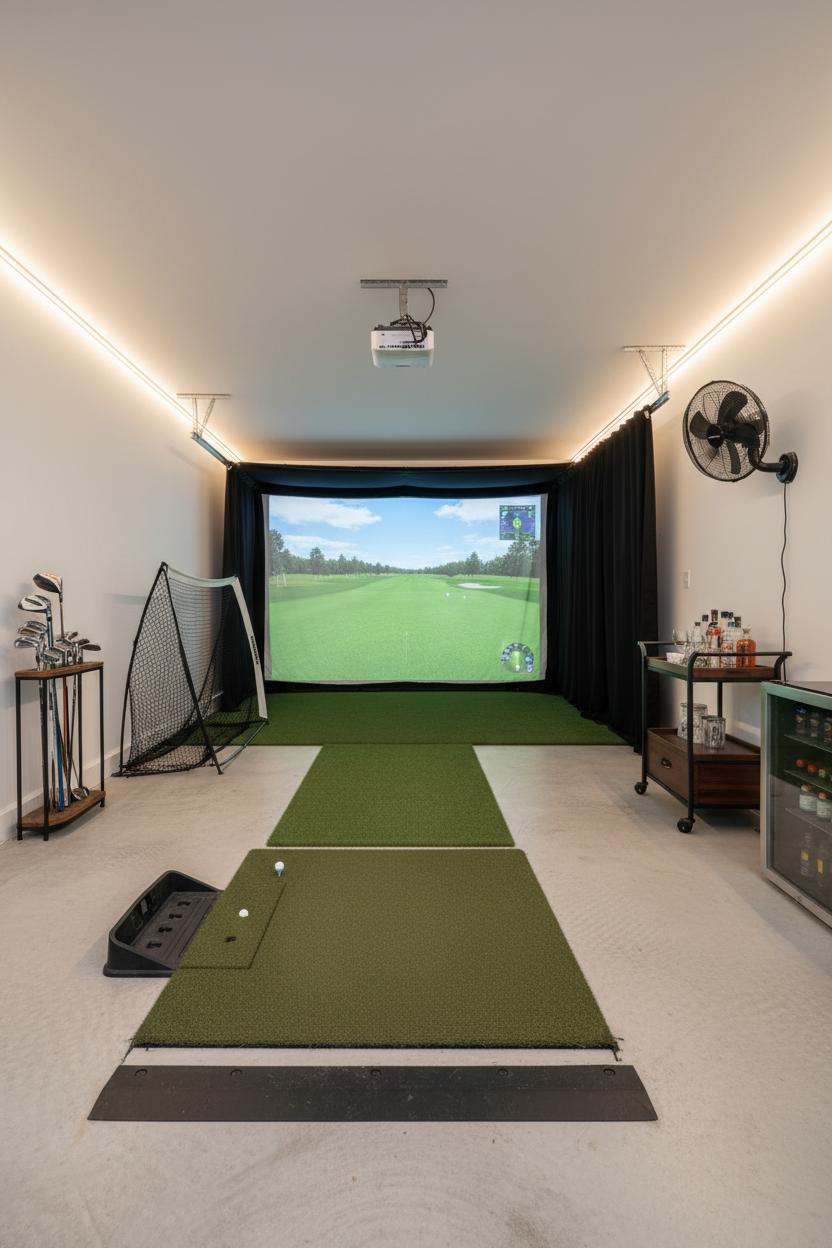
In a garage bay, think of the space as a blank canvas that flips from carport to clubhouse. Mount a retractable impact screen at the front, park a roll-up turf lane down the middle, and hang a ceiling-mounted golf simulator projector to keep floors clear. A quality hitting mat anchors the zone, and a foldable golf net catches off-center shots if you want an open-screen alternative. Add strip lighting, a wall fan, and a small bar cart for that man cave golf vibe without clutter. Ceiling height is key—aim for at least 9 feet—and consider a simple blackout curtain to tame glare from the garage door. A slim club storage rack on the sidewall and a rubber threshold ramp make it easy to slide everything against the wall when it’s time to park. This is the ultimate all-seasons golf simulator setup that still respects weekend errands.
For a basement nook, lean into cozy and layered. Choose an indoor putting green that fills the footprint (a 10–12-foot runner with a return cup is perfect) and flank it with acoustic panels or a soft rug to quiet echoes. If ceiling height is tight, pair a short-throw projector with your screen, or keep it simple with a golf net and tablet for swing capture. Paint the back wall a deep, moody shade, float a shelf for speakers and rangefinder, and weave in baskets for balls and tees—Pinterest-pretty meets practical. This is a great small space golf approach: a corner that moonlights as a family rec zone, but with enough polish to invite friends over for putting contests. Sprinkle a few framed course prints and a plant for warmth, and you’ve got one of the easiest, most livable golf room ideas.
In an office corner, go sleek and stealthy. A slim indoor putting green rolls out between the desk and window for brain breaks, while a pop-up net and compact hitting mat appear only when you’re in practice mode. Use a portable launch monitor with your laptop, and place the tripod behind your hitting station; after hours, it all tucks into a woven bin. A narrow club storage rack doubles as decor beside a bookcase, and a cordless task lamp sets that golden-hour feel for evening putts. It’s a tidy, modern take that shifts from Zoom calls to smooth strokes in seconds—proof that small space golf can still be beautiful and wildly effective.
Conclusion
From layered lighting to smart storage, this modern retreat proves the best golf room ideas blend form and function. Pair an indoor putting green with a dialed golf simulator setup, add acoustic touches, and choose durable textures for year-round play. Whether you crave man cave golf vibes or need clever small space golf solutions, design for flow, comfort, and easy maintenance. Brew something warm, dim the lights, and roll a few putts—your daily escape is only a swing away. Pin these tips and make practice feel like home.