

From iconic golf course architecture to chic backyard putting green ideas, this guide explores golf design and modern golf you can play and live with. Discover how masterful routing, sightlines, and hazards shape strategy—and how to translate them at home with low-maintenance turf, a portable putting green mat, a discreet golf practice net, and a precision putting cup trainer. We’ll also share golf decor tips and our favorite golf course architecture book picks to spark your vision. Ready to blend style and swing? Pin now and reimagine your space through modern golf.
Modern Golf Design 101: What Defines Today’s Golf Course Architecture
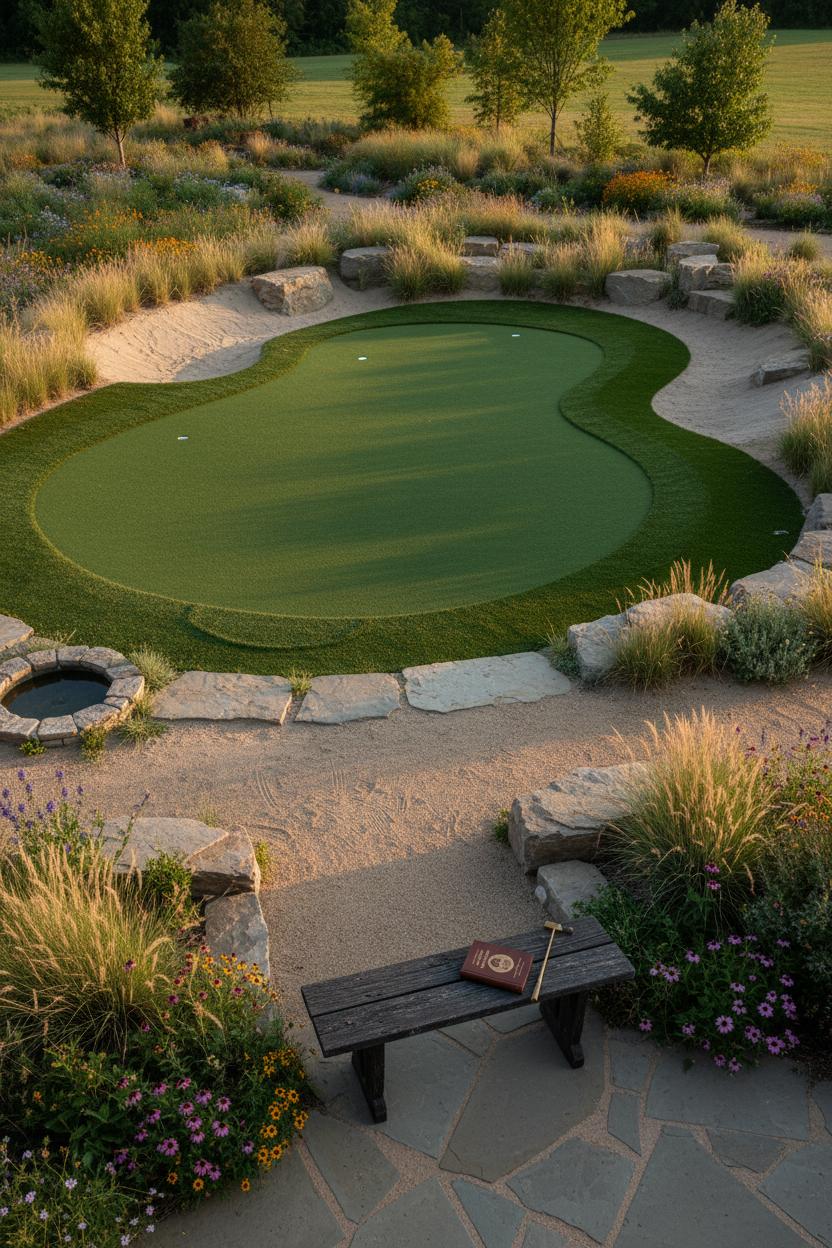
If you’ve noticed that today’s fairways feel friendlier, more artful, and strangely more strategic, you’re already picking up on what defines modern golf design. Instead of punishing narrow corridors and wall-to-wall sand, contemporary golf course architecture favors generous width, clever angles, and greens that invite the ground game with short-grass runoffs and rippling contours. Tees stretch forward and back to create a spectrum of yardages, so beginners and big hitters share the same stage without the same script. The best modern golf layouts are walkable, rhythmical, and cinematic, guiding you from one framed vista to the next while quietly asking, “Which line will you choose?” It’s equal parts playability and personality—strategy tucked into beauty—so every round feels like a friendly puzzle you can’t wait to solve again.
Sustainability is the quiet hero behind this shift. Designers lean into native plants, minimized irrigation, and contour-as-hazard to reduce maintenance while amplifying texture and color. Bunkers are fewer, more naturalized, and placed with intention; fairways bleed into sandy edges and fescue, creating that windswept, painterly look that photographs so well. Drainage and water capture are integrated from the first sketch, and low-maintenance turf selections support firm, fast playing conditions that reward imagination. This is modern golf at its most responsible: beautiful without being thirsty, challenging without being severe, and resilient through changing seasons and climates.
Bring those principles home and a backyard putting green becomes more than a patch of grass—it’s a tiny canvas for strategy and style. Think subtle breaks, a gentle chipping collar, maybe a curve that nods to your favorite hole, then layer in golf decor that echoes course textures: weathered wood, warm stone, native grasses in planters. If you’re working with a smaller space or renters’ rules, a quality putting green mat and a putting cup trainer can deliver the same contour-driven practice indoors, while a foldable golf practice net turns a side yard into a shot-making studio. Opt for low-maintenance turf if you’re building outside, and if you love the why behind these ideas, a thoughtfully chosen golf course architecture book can spark even more inspiration. That’s the heart of modern golf design: make it strategic, make it beautiful, and make it yours.
Course Layout Secrets: Routing, Risk–Reward, and Green Complexes in Golf Design
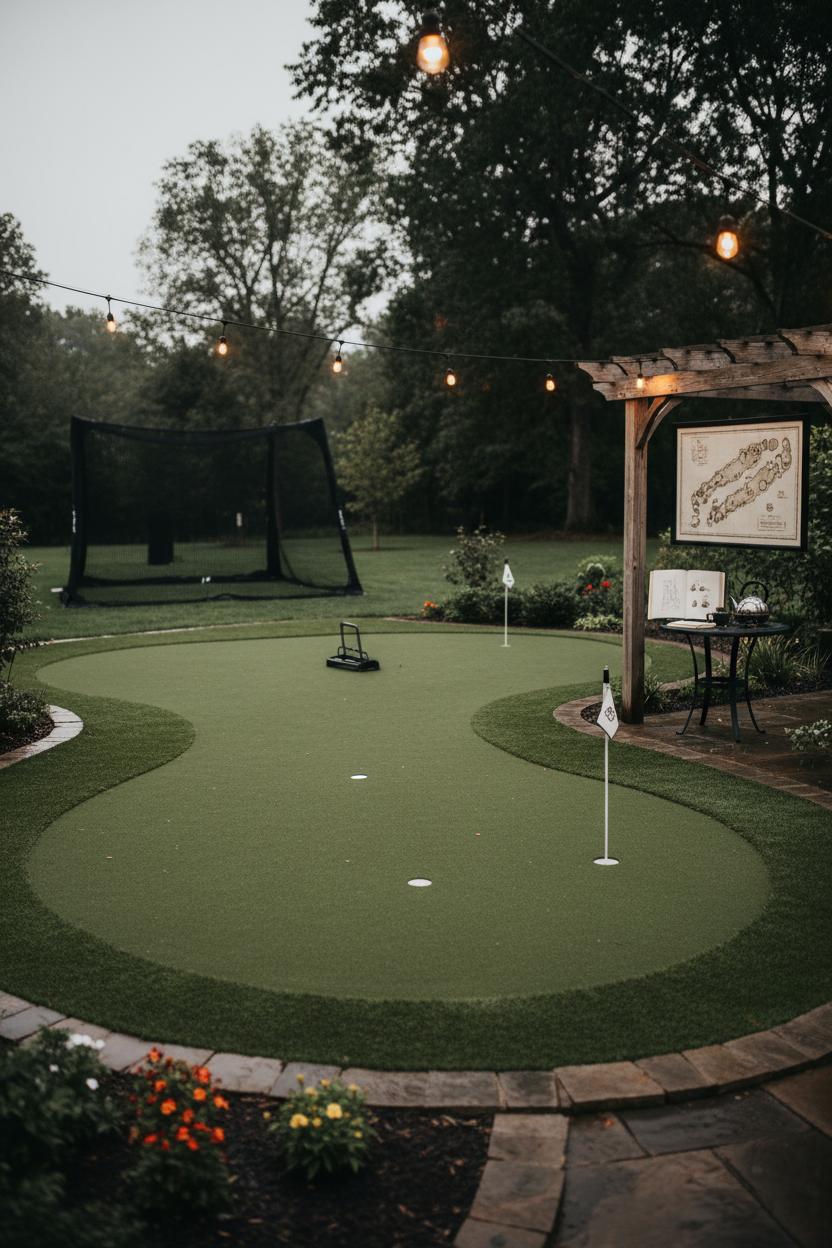
If you’ve ever walked a course and felt like the holes were telling a story, that’s routing at work—the quiet art of guiding you across the land so each shot feels fresh, the views open and close, and the wind whispers a different plot twist on every tee. In golf design, great routing blends rhythm with restraint: a gentle handshake par 4, a bolder ask over water, then a short hole that tempts you to chase the pin. Modern golf often borrows the best of classic golf course architecture—using natural contours, smart angles, and sun exposure—to create variety without shouting. Even the walk between greens and tees matters; it’s the connective tissue that makes the round feel like a single, satisfying narrative.
Risk–reward is the spice rack. Designers widen fairways where angles matter, tighten them where commitment should count, and place hazards so bold lines are rewarded and timid ones find awkward lies. Think of a drivable par 4 with a tucked green: take the heroic line and you’re dancing; bail out and you’re bumping a nervy wedge over a swale. You can bring that same strategy home on a backyard putting green by shaping simple choices—tiers, little backstops, and a cheeky false front. Set up a putting cup trainer on the high side to practice pace control, then switch to a sidehill read for nerve-testing three-footers. Add a golf practice net at the edge of the yard to rehearse those flighted wedges that make angles matter in the first place.
And then there are green complexes—the soul of golf course architecture. Subtle crowns, short-grass runoffs, and shoulder slopes that repel imperfect approaches can make a modest hole feel endlessly replayable. At home, a low-maintenance turf surface with a few soft mounds and a fall-away corner mimics that intrigue, while a portable putting green mat indoors keeps the feel going when the weather doesn’t. Finish the scene with warm golf decor—a vintage flagstick, stone edging, maybe a framed routing map—and you’ll have your own tiny sanctuary of modern golf. On rainy evenings, flip through a favorite golf course architecture book for ideas, sketch a new pin location, and let tomorrow’s practice take shape before the kettle even boils.
From Course to Home: Planning Your Backyard Putting Green
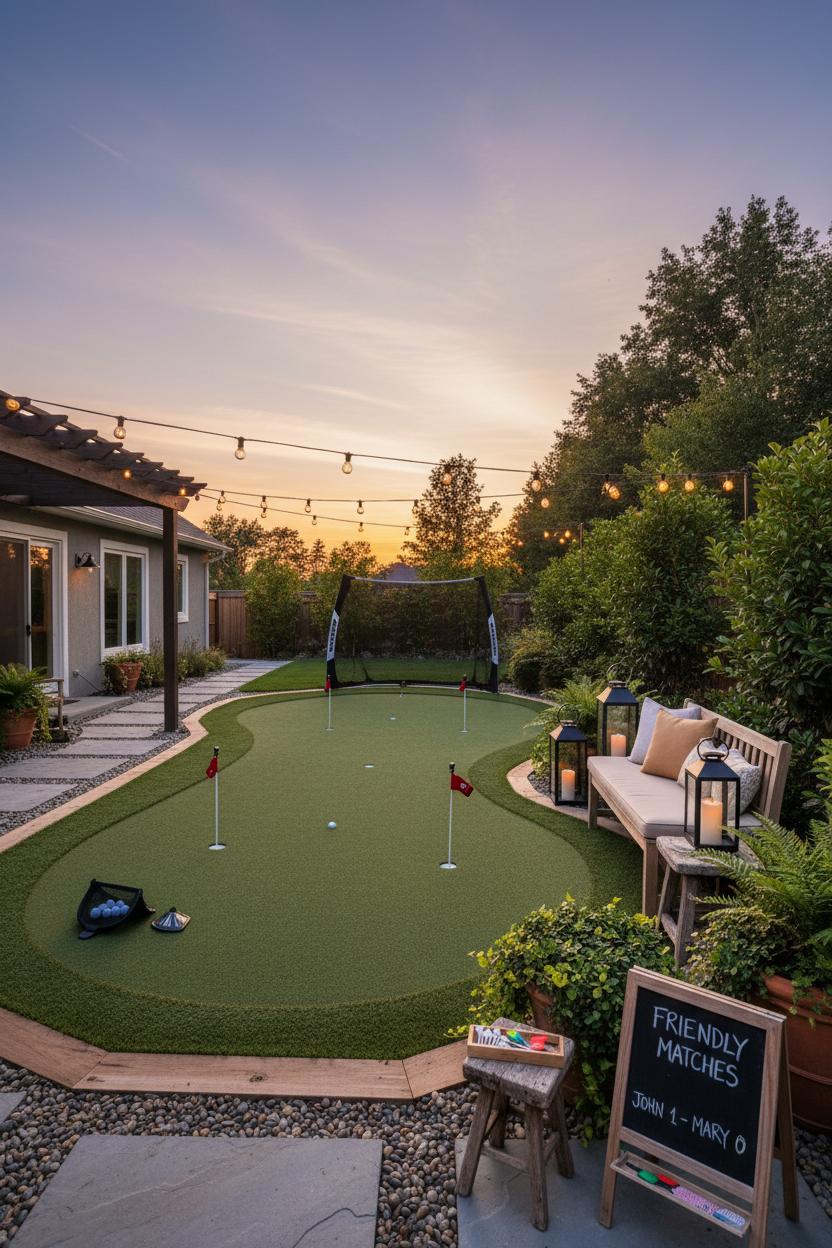
Bringing the calm, strategic feel of a great par-3 home starts with thinking like a shaper: study the sun, the slope, and how water will move after a storm. Sketch a simple golf design that suits your space—kidney, rectangle, or a soft teardrop—and plan for gentle contours (enough break to read, not so much it feels like a carnival). A compact “front pin,” a trickier “back-right,” and a subtle ridge can echo the decisions you love in golf course architecture without overwhelming the yard. If you’re going synthetic, choose low-maintenance turf with a tight, realistic pile and a firm base of compacted stone for true roll; edge it with brick, cedar, or gravel to blend it into your landscaping. Natural grass works too if you love the ritual, but it needs consistent mowing and topdressing. Either way, give yourself at least one straight putt for confidence and one slippery line for drama, then add a path, a bench, and soft lighting to fold the green into your evening routine.
Think beyond the cup to the vibes. A clean, modern golf look pairs beautifully with warm textures—linen cushions, lanterns, and planters—so your backyard putting green doubles as inviting golf decor. For practice variety, set a golf practice net nearby for chips and bump‑and‑runs, and keep a putting cup trainer on hand for quick tempo sessions. If space is tight or you’re renting, a roll‑out putting green mat inside or on the patio scratches the itch without a shovel. Inspiration is everywhere: flip through a favorite golf course architecture book and borrow micro-contours from classic greens you adore—think subtle spines, gathering slopes, and gentle fall-offs. Finish with small touches that make it yours: a tray for tees and markers, a weathered stool for the short-game bag, and maybe a chalkboard to track friendly matches. The result is modern golf living—part sanctuary, part playground—where every putt feels like a page torn from your favorite course.
Layout Ideas: Backyard Green Designs Inspired by Modern Golf Strategy
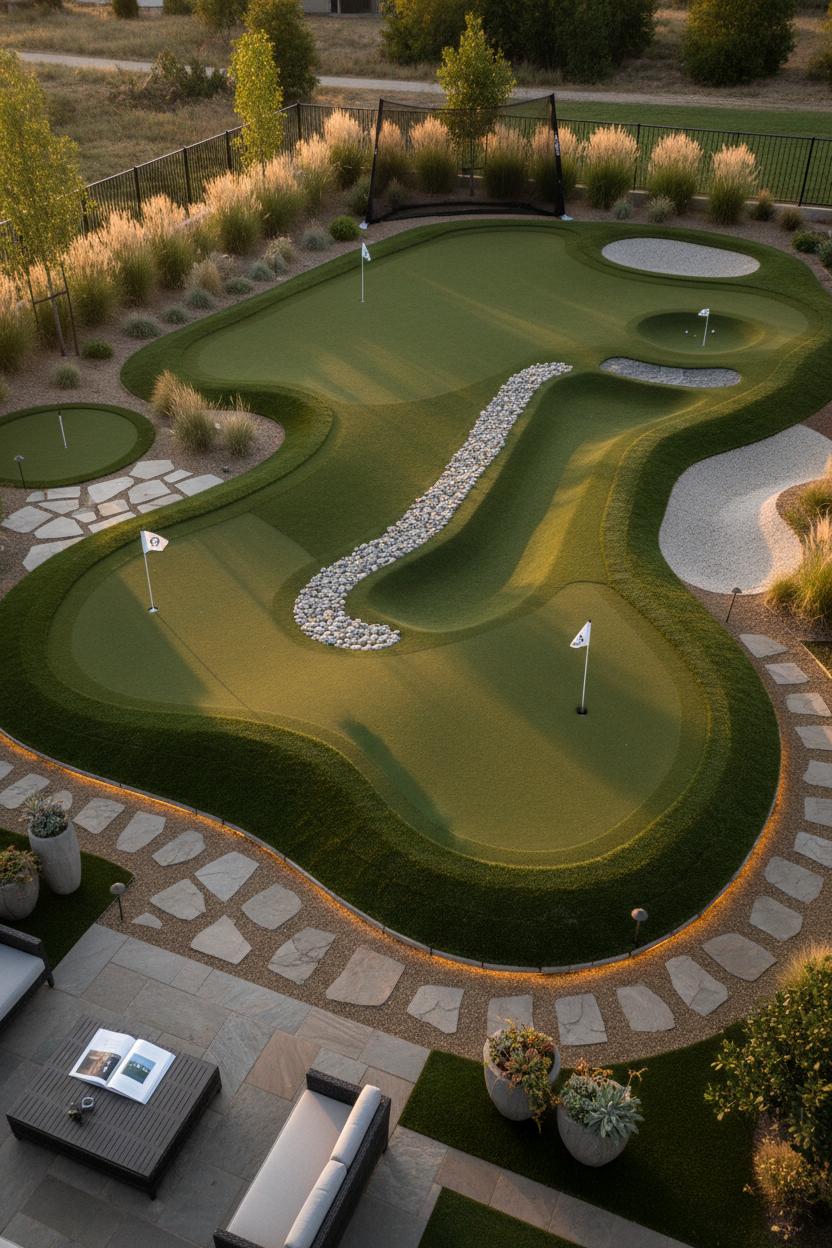
Think strategy first, shape second. The prettiest backyard putting green feels magical when it borrows ideas from modern golf, where angles, width, and little risks make every putt and chip feel intentional. Instead of a simple oval, try a diagonal green pad that sets up two lines: a safe approach across a generous apron and a “heroic” line over a skinny centerstrip of river pebbles or a ribbon of contrasting mulch that acts like a centerline hazard. Soften the edges with low-maintenance turf, then carve a gentle ridge or false front so pace matters as much as aim. This is golf design in miniature—sightlines from your “tee” patio, a backstop berm that gathers bold shots, and a side escape that leaves a nervy up-and-down, all inspired by the best of golf course architecture.
Bring in classic templates at pocket scale to keep things playful and clever. A Redan-inspired tilt—high front, canted to one side—lets you use a kicker slope to feed balls toward the hole from the outside angle. A shallow Biarritz-style swale can be a simple trench of smoother turf through the middle, perfect for working on pace control, while a tiny punchbowl lip along the back makes bold putts feel rewarded. If you have room, a micro double-plateau with two subtle shelves creates morning and evening pin positions; rotate a putting cup trainer for different skill levels and make short chips feel like match-play moments. Keep a putting green mat indoors to prototype breaks before you cut contours outside, and thumb through a favorite golf course architecture book to spark ideas on width, contour, and pin flexibility that scale beautifully to a yard.
Think of movement and mood, too. Place chipping stations at varied angles so you rehearse the kind of choices modern golf asks of you—bump, loft, or putt through the fringe. Align a discreet golf practice net downwind for wedge reps that flow into your green, and give the whole space a glow with soft path lights and sculptural golf decor—slim flags, stone “bunkers” filled with pale gravel, and planter “tee markers” that guide a natural walking loop. With smart drainage, a calm color palette, and textures that invite bare feet, your layout becomes a tiny course: strategic, beautiful, and ready for everyday joy.
Style Your Space: Golf Decor Tips That Elevate Your Backyard Putting Green
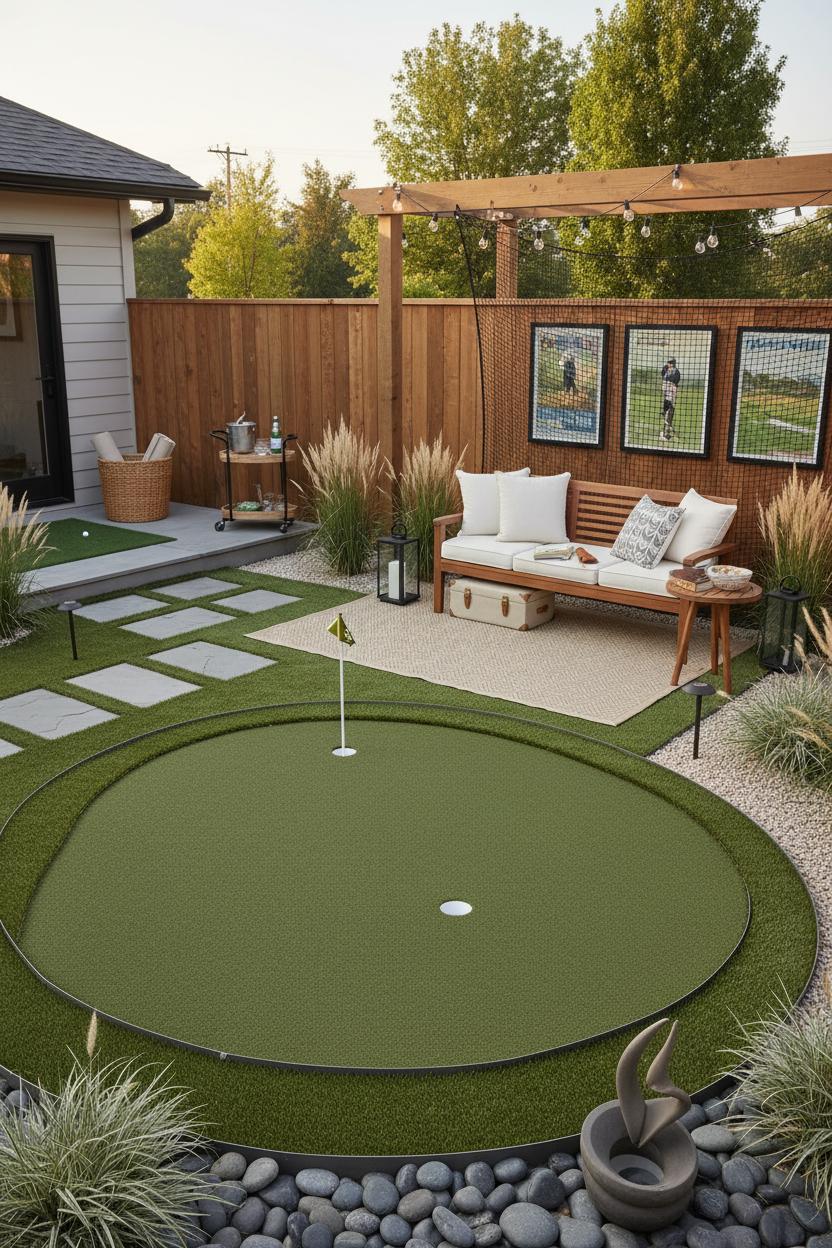
Think of your backyard putting green as a petite canvas for great golf design—part performance space, part sanctuary, all about vibe. Start with the foundation: a sweep of low-maintenance turf framed by crisp steel edging or warm cedar to give the surface a gallery-like moment. Borrow from golf course architecture by layering textures to create depth: a ribbon of pale gravel as a “bunker” border, tufts of ornamental grass to frame sightlines, and a fringe cut that visually guides your eye toward the cup. Keep the palette grounded in modern golf minimalism—muted greens, cloud-white cushions, matte black lanterns, teak accents—and then add comfort through tactile details like a woven outdoor rug and a slatted bench that echoes the rhythm of fairway stripes at sunset.
Function can be beautiful when you let training tools double as golf decor. A putting cup trainer looks sculptural set into an inset tray of river stones, while a leather ball pouch and wooden tees displayed in a ceramic bowl add quiet clubhouse polish. Tuck a putting green mat on the porch for rainy-day rolls, and store it in a rattan basket so it reads as part of the styling. If you’re adding a golf practice net, soften its lines with a cedar privacy screen or a slim pergola draped in cafe lights, so practice melts into the mood of the evening. Underfoot, stepping stones act like a tee-to-green path, and a small water bowl or bubbler provides that restful hush you feel on the third hole at golden hour. Vary the “rough” at the perimeter and keep the interior clean to mirror classic golf course architecture transitions.
Personal touches make everything sing. Stack a favorite golf course architecture book on an outdoor side table with a brass bookmark, frame vintage tournament prints in weather-friendly acrylic, and shadowbox a couple of memorable scorecards. A slim bar cart with turf coasters nods to the 19th hole, while solar path lights can subtly “flag” your routing after dark. Keep wedges, markers, and a rangefinder tucked into a canvas trunk, ready for guests to roll a few. Above all, let your golf decor tell your story—considered, cozy, and quietly elevated—so your space feels like modern golf distilled right into the backyard.
Conclusion
From smart fairway flow to serene garden greens, modern golf is about joyfully designed spaces. Let thoughtful golf course architecture inspire your own golf design at home: a petite backyard putting green, sculpted contours, and calming textures. Layer in golf decor—heritage hues, natural stone, brass tees—to echo the course’s rhythm indoors. Whether you’re mapping bunkers or styling a porch for putts at dusk, modern golf invites play and pause. Brew something warm, step outside, and savor a life where design, practice, and simple moments meet.