

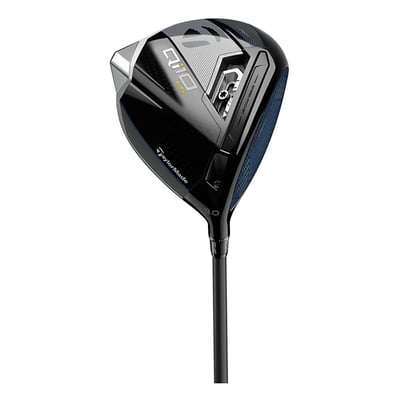



TaylorMade Qi10 LS Driver Review
Introduction
The TaylorMade Qi10 LS Driver is a premium driver from TaylorMade, one of the
most established manufacturers in modern golf equipment. This club sits in the golf driver
category and is designed primarily for golfers who want to reduce spin, tighten dispersion, and
maximize distance through a more penetrating ball flight. The “LS” designation typically indicates a
lower-spin profile, making it most appealing to players with moderate-to-fast swing speeds or those who
generate excess spin with standard drivers.
At a listed price of $399.99, the Qi10 LS competes in the high-end driver market where buyers
expect meaningful performance gains, refined adjustability, and consistent build quality.
Appearance, Materials, and Design
The Qi10 LS presents a modern, tour-inspired look that emphasizes speed and stability. At address, it typically
appeals to better players who prefer a more compact, confidence-inspiring shape rather than a stretched, ultra-forgiving
profile. The overall aesthetic is clean and performance-focused, with subtle alignment cues intended to help you set up
square without distraction.
In terms of construction, TaylorMade drivers in this tier commonly use a mix of lightweight composite and metal structures
to optimize weight distribution and boost stability. The Qi10 LS is designed around the idea of pushing mass to strategic
areas of the head to keep ball speed up while controlling spin. A notable design priority here is balancing
low-spin performance with sufficient stability so the club doesn’t feel overly “punishing” compared to
traditional low-spin heads.
Unique design elements typically include an emphasis on aerodynamic shaping (to help clubhead speed) and a face and crown
structure that supports consistent launch and speed retention across a useful hitting area. While low-spin drivers can sometimes
look intimidating, the Qi10 LS aims for a “player’s” look without appearing overly small.
Key Features & Specifications
- Manufacturer: TaylorMade
- Product: Qi10 LS Driver
- Category: Golf Driver
- Intended use: Lower spin, penetrating launch, distance optimization, and tighter dispersion for stronger players
- Adjustability: Loft/lie tuning via adjustable hosel (varies by fitting and configuration)
- Head profile: “LS” (low spin) design philosophy; typically more “tour” oriented than max-forgiveness models
- Price: $399.99
Note: Exact loft options, head volume, stock shaft offerings, and swing-weight details can vary by retailer and region.
For best results, confirm the specifications of the specific build you’re purchasing (especially shaft, loft, and any included weights).
Performance and On-Course Experience
1) Launch and Spin Control
The defining trait of the Qi10 LS is its intent to keep spin down. For players who balloon the ball or see excessive
backspin that costs carry and roll, the LS profile can produce a more penetrating flight and better forward momentum after landing.
When fit correctly (loft and shaft), it can turn a “high-spin fade” into a more efficient, flatter trajectory that holds its line.
That said, low-spin heads can be less forgiving if your launch is already low or if you don’t deliver enough dynamic loft. Golfers with
slower swing speeds or downward attack angles may struggle to achieve optimal carry without increasing loft or choosing a higher-launch shaft.
2) Distance Potential
In ideal strikes, the Qi10 LS is built to reward good contact with strong ball speed and efficient flight. Distance gains are most noticeable
for players whose previous driver produced “spinny” launches—reducing spin can convert height into usable carry and add roll-out on firmer fairways.
On mishits, the distance drop-off depends heavily on strike location. Low-spin designs can sometimes lose a bit more carry on low-face strikes (where spin
and launch can become suboptimal), so consistent tee height and impact control matter more than they might with a max-MOI model.
3) Forgiveness and Dispersion
The Qi10 LS is aimed at golfers who want a more controlled flight rather than absolute maximum forgiveness. If your typical miss is a
high-spin slice, reducing spin can help keep the ball from peeling as far offline. However, if your miss is a low-heel cut with weak contact, you may still
see curvature and distance loss.
Compared with “max” forgiveness drivers in the same family, you should expect the Qi10 LS to feel more precise and workability-friendly, but potentially less
stable on big mishits. In return, it can offer a tighter, more penetrating window when your swing is consistent.
4) Workability
The LS format generally suits golfers who like shaping shots—holding off a fade into a breeze, turning over a controlled draw, or hitting a lower “bullet”
trajectory when conditions demand it. The club’s appeal grows if you enjoy manipulating face angle and delivery rather than relying solely on built-in
draw-bias or ultra-high stability.
5) Sound and Feel
Feel and acoustics are subjective, but the Qi10 LS is positioned as a premium driver with a solid, responsive sensation at impact. Center strikes should feel
powerful and crisp, with feedback that better players often appreciate. Off-center strikes are usually more “informative” (you’ll know where you hit it), which
can be a positive for improvement but less pleasant for golfers who want a uniformly muted feel.
6) Different Playing Scenarios
- Windy conditions: The lower-spin, more penetrating flight can be a real advantage, helping reduce ballooning and maintaining direction in headwinds.
- Firm fairways: Lower spin can increase roll-out, potentially turning good carries into longer total distance.
- Soft fairways: The value shifts more toward carry optimization; if spin gets too low, you may lose carry and see fewer benefits on landing.
- Tight driving holes: Players seeking dispersion control may like the “LS” stability-through-efficiency, but golfers needing maximum mishit protection may prefer a higher-MOI alternative.
- High-handicap consistency challenges: If strike pattern is wide, the LS design may feel demanding unless you’re fit into sufficient loft and a more forgiving shaft profile.
Pros & Cons
Pros
- Excellent spin reduction potential for players who generate too much spin
- Penetrating flight that can perform well in wind and produce strong total distance on firm turf
- Player-friendly look at address with a premium, performance-driven aesthetic
- Good workability for golfers who like to shape tee shots
- Adjustability (via hosel tuning) helps dial in launch conditions during a fitting
Cons
- Not the most forgiving option for golfers with inconsistent strike patterns compared to max-stability drivers
- Can be hard to launch optimally for slower swing speeds or players who already struggle with low launch
- Low-spin “miss penalties” may show up on low-face/heel strikes with reduced carry
- Premium price point ($399.99) means value depends heavily on fit and measurable performance gains
Conclusion
The TaylorMade Qi10 LS Driver is best viewed as a purpose-built tool: a high-end, low-spin driver designed for golfers who want a more
efficient, penetrating ball flight and who can benefit from spin reduction without sacrificing too much launch. In the right hands—and ideally after a proper
fitting—it can deliver impressive distance, controlled trajectory, and the kind of feedback and workability that skilled players often prefer.
However, it’s not a universal solution. If you prioritize maximum forgiveness, struggle to get the ball airborne, or have a highly variable strike pattern, a more
forgiving driver model (or a higher-launch configuration) may provide better real-world results. For players who match the “LS” profile and want a driver that
rewards solid contact with strong, efficient performance, the Qi10 LS is a compelling option in the premium driver space.


Reviews
There are no reviews yet.